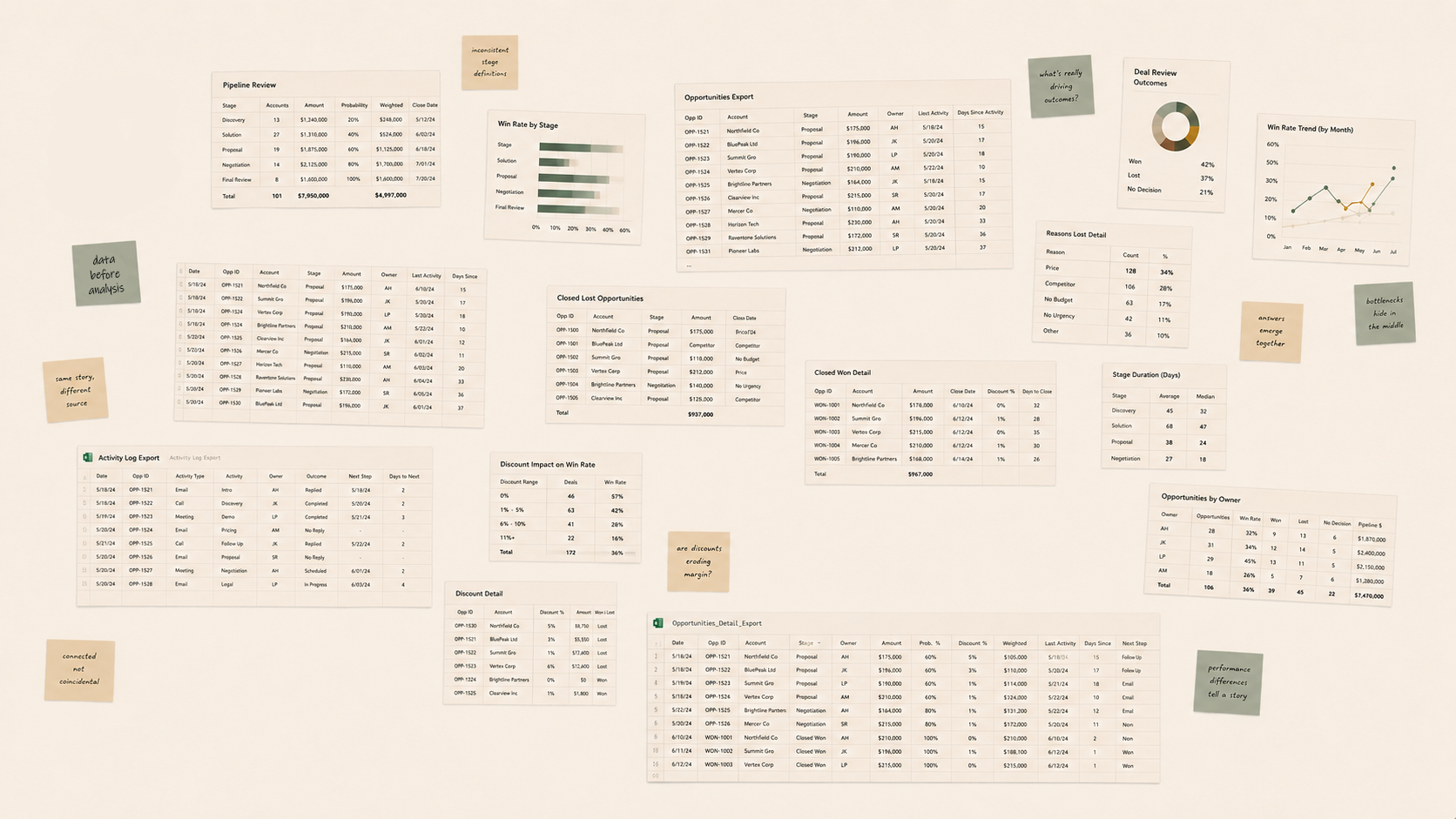
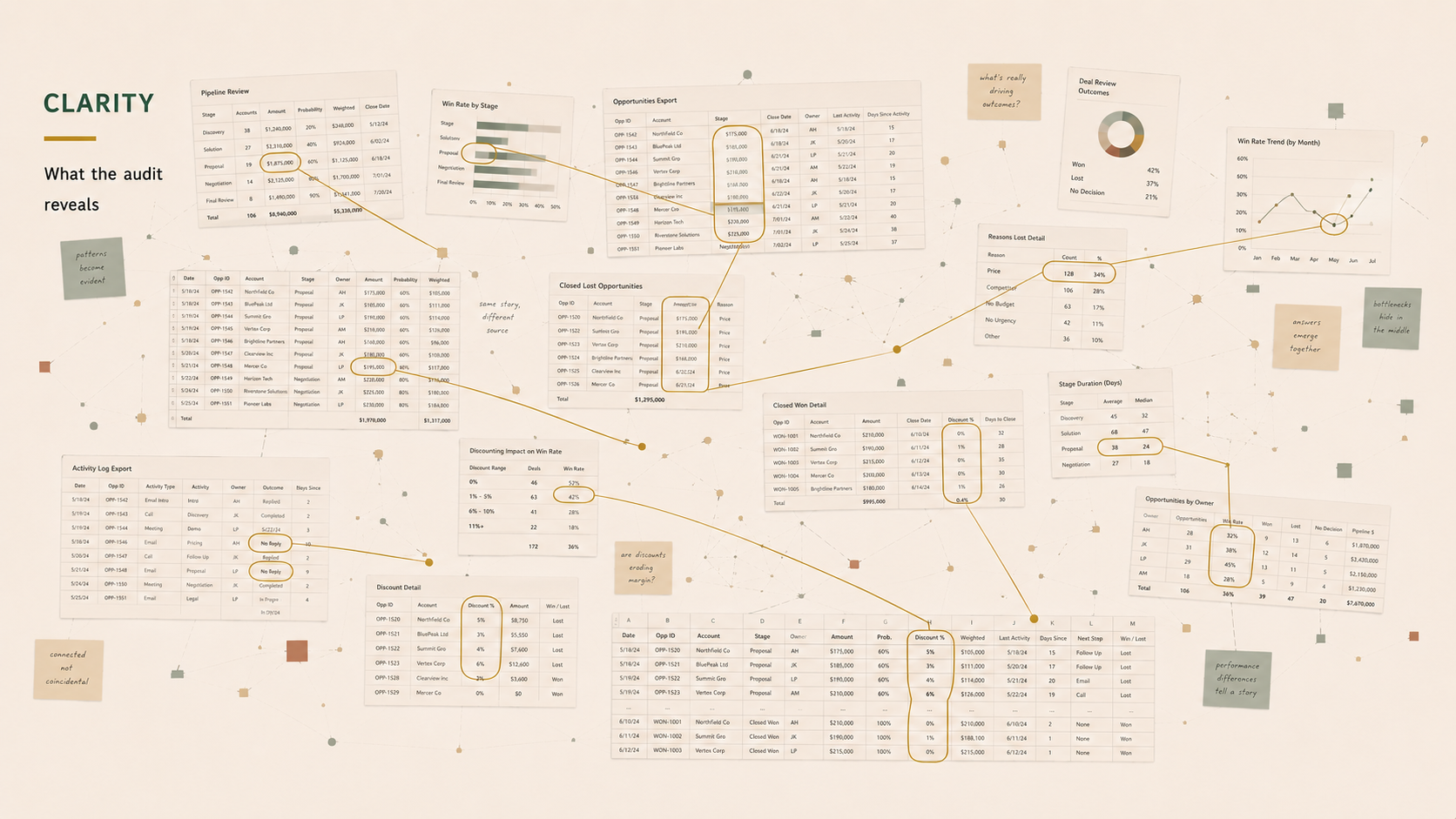
What the Audit Reveals
A real example of the patterns and findings uncovered through the Lonsbury Lost Sales Analysis™. Details have been generalized from representative data.
One Pattern. One Audit. Real Revenue.
Most pipelines contain two to four distinct loss patterns. Some are follow-up problems. Some are proposal structure problems. Some are qualification problems. The example below reflects the most common pattern we find — and one of the most recoverable.
The combination of patterns — and the dollar value of each — is specific to your business. The only way to know which patterns are present in your pipeline is to look at your data.
Proposals Going Quiet After Submission
What We Looked At
- 28 proposals submitted over a six-month period
- Mix of won, lost, and no-decision outcomes
- All commercial accounts
What the Data Showed
Of 11 proposals that did not result in a closed contract:
- 5 had no documented follow-up activity after the proposal was sent
- 2 had a single follow-up within 48 hours — with no continued outreach after that
- In most cases, the last recorded activity was simply: “Proposal sent”
After that, the opportunities went quiet. Not because the prospect said no — because no one pushed them to a decision.
What Was Not Present in the Lost Proposals
- No formal rejection from the prospect
- No indication the prospect chose a competitor
- No pricing objection on record
In several cases, the prospect had been engaged during the discovery phase — asking questions, requesting revisions, indicating internal discussion. But once the proposal was delivered, momentum stopped. No next meeting was scheduled. No decision timeline was confirmed. No structured follow-up occurred.
Root Cause
These proposals were not lost because of price, competition, or fit. They were lost because the sales process ended at submission. The proposal became the final step instead of a transition to the next conversation.
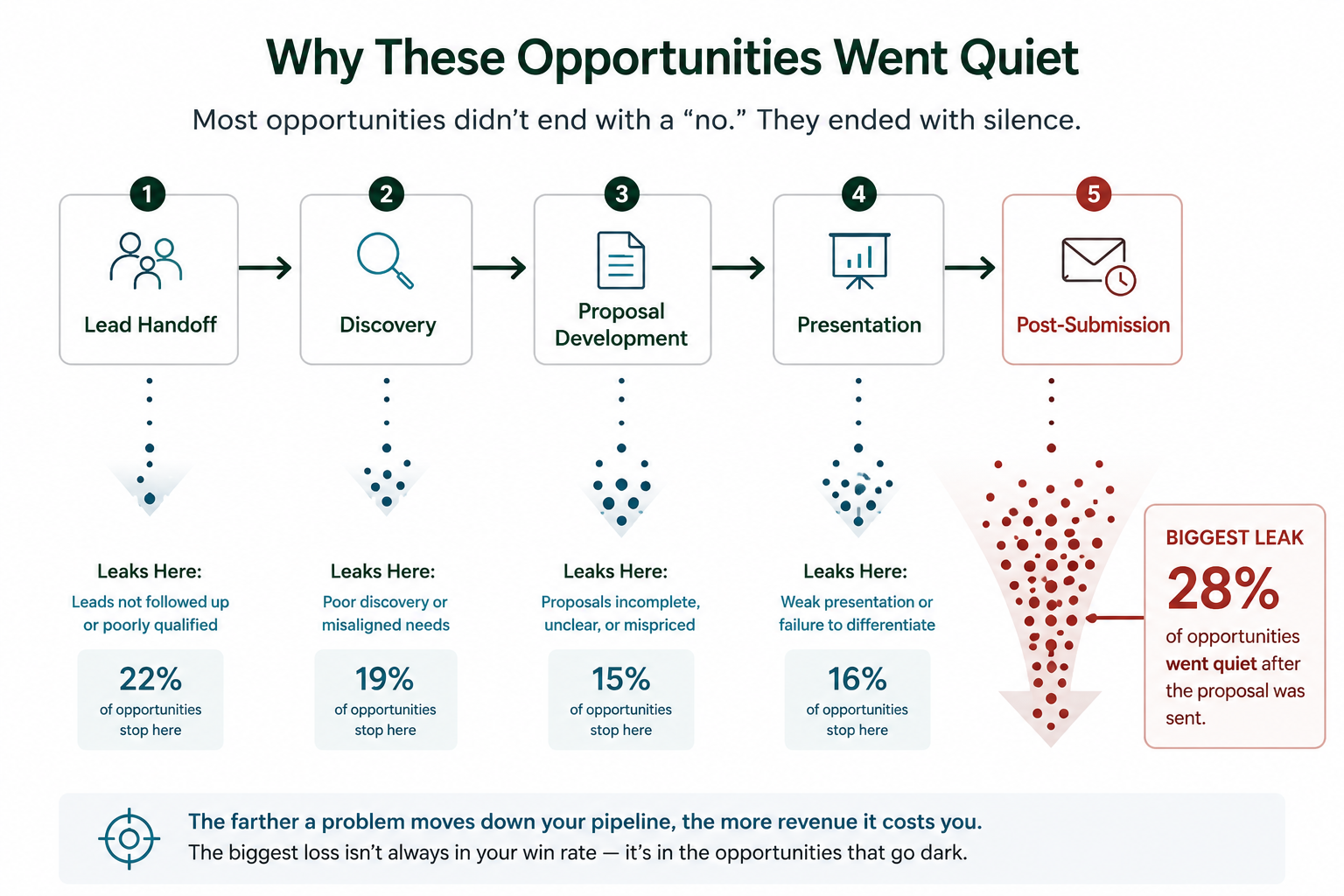
Revenue Impact — This Finding Alone

This is one finding from one engagement. Most audits surface two to four patterns of this type. The cumulative value typically exceeds the $15,000 guarantee threshold within the first pattern identified.
What Should Change
The goal is straightforward: proposals should not be allowed to go quiet. A no-decision is still a decision — it should be reached intentionally, not by default.
Before Sending a Proposal
- Confirm the decision timeline with the prospect
- Schedule the next conversation — don’t leave the next step open-ended
After Sending a Proposal
- Follow up within 24–48 hours to confirm receipt and surface questions
- Maintain a structured outreach cadence until a decision is reached
- Assign ownership explicitly — one person owns follow-up for each proposal
One Unanswered Proposal Looks Like a Normal Loss.
Multiply It Across a Pipeline and It Becomes One of the Most Consistent and Recoverable Revenue Problems We See.
The companies that improve here don’t change their pricing, their service offering, or their marketing. They change what happens after the proposal goes out.
Follow-up failure is the most common pattern — but it’s rarely the only one. This is one pattern from one audit.
Most Pipelines Contain Two to Four Distinct Loss Patterns
The specific patterns in your pipeline — and the dollar value of each — can only be determined by examining your actual data.
Proposal Structure Problems
Proposals that don’t differentiate, don’t address known objections, or leave pricing unclear.
Qualification Gaps
Proposals submitted to prospects who were never properly qualified — consuming resources with low close probability.
Discovery Failures
Proposals that miss the mark because the discovery conversation didn’t surface the real decision criteria.
Do you want to know what your data actually shows?
The discovery meeting is free. The audit takes two weeks. You either find at least $15,000 in recoverable revenue, or you pay nothing.
Request a Discovery Meeting
Submit this form to schedule your FREE Discovery Meeting.